Real estate speed to lead is the response-time system that helps teams turn listing inquiries, buyer calls, seller leads, and CRM alerts into live conversations before prospects move on.
Real estate speed to lead is the time between a buyer, seller, renter, or referral inquiry and your first meaningful response. For brokerages and real estate teams, it is an operating standard for protecting lead spend, booking showings, and giving motivated callers a live path forward before they contact another agent.
This guide is the speed-to-lead piece. For how an AI receptionist is used by agents, teams, and brokerages to answer, qualify, and route before a callback clock starts, read AI Receptionist for Real Estate: Complete Guide for Agents, Teams & Brokerages.
A buyer sees a listing at 9:48 PM. They tap the phone number, ask whether the property is still available, and want to see it this weekend. Your agent is at dinner. The call goes to voicemail. By morning, the buyer has already booked a showing with someone else.
That is the speed-to-lead problem in real estate. This guide explains how to measure it, improve it, and use AI call answering without losing the human handoff that wins trust.
You will learn:
What real estate speed to lead means and how to measure it
Which response-time benchmarks are worth using
How to score your current lead response system
How to model missed opportunity with your own numbers
AI call workflows for listing, seller, and CRM leads
How U.S. and Canadian teams should think about consent, privacy, and routing
Real estate speed to lead is the elapsed time from a new inquiry to the first useful response that moves the prospect toward a conversation, showing, consultation, or qualification step.
A useful response is not a generic autoresponder that says, "Thanks, we received your message." A useful response references the caller's intent, confirms the next step, and starts collecting the information an agent needs.
Examples of meaningful first responses include a live answer to a listing call, an AI receptionist asking which property the buyer is calling about, a permitted callback after a website form submission, a personalized SMS that references the listing or showing request, or a CRM-routed alert that sends the lead to the right agent with context.
Speed to lead is different from follow-up cadence. Follow-up cadence is what happens after first contact. Speed to lead is the first moment, when buyer or seller intent is highest.
Real estate teams struggle with speed to lead because the work of selling homes conflicts with the work of answering every inquiry instantly. Agents are in showings, listing appointments, inspections, closings, client calls, open houses, and weekend family time. The best moments for prospects to search are often the worst moments for agents to answer.
The problem is also fragmented. Leads arrive from Zillow, Realtor.com, REALTOR.ca, IDX forms, Google Ads, Facebook lead forms, yard signs, open houses, referrals, direct mail, and phone calls. If those sources do not route into one system, the team cannot see response time clearly.
This is why a dedicated speed-to-lead system matters. A real estate team does not need more reminders to call faster. It needs a coverage layer that can answer, qualify, route, and log every lead while humans focus on relationships and negotiations.
For broader call coverage decisions, see TalkLuna's guide to a real estate answering service. For CRM-specific handoffs, see AI answering service in real estate.
The best benchmark is not one number. It is a response ladder: under 60 seconds is elite, under five minutes is the practical minimum for competitive online leads, and anything after 30 minutes should be treated as leakage unless your own CRM proves otherwise.
Two foundational studies are often mixed together online, so attribution matters. The MIT and InsideSales.com Lead Response Management Study found that contacting a web lead within five minutes versus 30 minutes was associated with much higher contact and qualification odds. The study measured contact and qualification, not guaranteed closings.
Harvard Business Review's The Short Life of Online Sales Leads reported that firms trying to contact prospects within an hour were nearly seven times as likely to qualify the lead as firms that waited another hour, and more than 60 times as likely as firms that waited 24 hours or more.
Real estate adds a specific reason the curve matters: buyers and sellers often inquire with multiple agents or portals at the same time. According to the National Association of REALTORS 2025 Profile of Home Buyers and Sellers, 46 percent of buyers started by looking for properties online, 52 percent found the home they purchased online, and 70 percent used a mobile or tablet device during the search. In Canada, CREA reported that REALTOR.ca generated 633 million visits and more than two billion listing page views in 2025.
Benchmark | What it means | How to use it |
|---|---|---|
Under 60 seconds | Elite response target for paid portals, listing calls, and high-intent forms | Use AI answering, live routing, or an ISA queue to start the conversation immediately |
Under 5 minutes | Practical minimum for competitive buyer, seller, and showing inquiries | Set this as your team SLA for new internet and phone leads |
5 to 30 minutes | Risk zone where contact and qualification odds fall quickly | Use automation to prevent leads from sitting in inboxes or voicemail |
30 minutes to 24 hours | Leakage zone for most paid and listing-driven leads | Audit source, agent assignment, and after-hours coverage |
24 hours or more | Recovery mode, not speed to lead | Move to reactivation scripts and nurture rather than treating the lead as fresh |
These are operating benchmarks, not guaranteed conversion rates. Use your own CRM data to validate appointment rate, show rate, and closed-client rate.
A strong speed-to-lead system scores well on response time, routing accuracy, qualification quality, CRM sync, compliance, and human handoff. Use this scorecard before buying more leads.
Criterion | 0 points | 1 point | 2 points |
|---|---|---|---|
First response time | Often over 30 minutes | Usually under 10 minutes during business hours | Under 5 minutes across business hours, evenings, and weekends |
Phone coverage | Voicemail or missed calls | Live answer during office hours only | 24/7 AI, live, or hybrid coverage with escalation rules |
Qualification | Name and phone number only | Basic buyer or seller questions | Budget, timeline, financing, property interest, motivation, and agent status |
CRM sync | Manual notes | Partial contact creation | Structured notes, source, transcript, tags, task, and assigned owner |
Reporting | No speed-to-lead report | Average response time tracked | Response time by source, agent, hour, outcome, and lead type |
Score guide: 0 to 6 means lead spend is likely leaking before agents can work the pipeline. 7 to 11 means the team has a partial system, but after-hours or CRM gaps are costing appointments. 12 to 16 means the team has a scalable response operation and should optimize scripts, reporting, and handoffs.
For qualification fields, TalkLuna's real estate lead qualification guide goes deeper into buyer and seller scoring.
The simplest way to model speed to lead is to estimate how faster first response changes appointment creation, then apply your own appointment-to-client and commission numbers.
Formula: monthly incremental opportunity = monthly inbound leads x appointment-rate lift x appointment-to-client rate x average gross commission.
Example only: 60 monthly inbound phone and web leads x a 4 percentage point appointment-rate lift x 20 percent appointment-to-client rate x $9,000 average gross commission = $4,320 per month. Annualized, that example equals $51,840 in potential gross commission exposure.
Example only. Replace the inputs with your own CRM data. This is not a forecast or guarantee.
The key insight is that speed to lead affects the same marketing budget. If a team already pays for portals, ads, SEO, yard signs, and referral campaigns, slower response reduces the value of money already spent.
AI call answering improves real estate speed to lead by making the first conversation immediate, structured, and logged. It should not replace licensed advice, negotiation, pricing strategy, or relationship work.
An AI receptionist can pick up listing calls, buyer inquiries, seller valuation requests, rental questions, and office overflow calls. The goal is to prevent voicemail from becoming the first impression.
For a listing call, the AI can ask which property the caller is asking about, whether they are buying or selling, whether they are already working with an agent, what their ideal timeline is, and whether they want a showing or a conversation with the listing agent.
A fast response without qualification creates noise. A better system tags and routes leads by intent. Buyer calls may need price range, preferred area, financing status, timeline, property type, and agent representation status. Seller calls may need property address, reason for selling, timeline, home condition, and whether the seller wants a valuation or listing consultation.
Real estate teams should expect structured CRM records, not loose transcripts. A useful speed-to-lead workflow creates or updates the contact, assigns the lead source, logs the call, attaches the transcript, adds tags, creates tasks, and notifies the owner.
The RESO Data Dictionary is a useful reminder that real estate technology works better when systems share consistent data definitions. Your AI answering workflow does not need to be RESO-certified to be useful, but it should map fields consistently across CRM, calendar, and reporting tools.
For simple calls, the AI can book a showing request, buyer consultation, seller valuation call, or open house follow-up. For high-stakes questions, the AI should escalate with context. Pricing strategy, offer negotiation, legal questions, dual agency questions, financing advice, disclosure concerns, and emotional seller situations should route to a human.
The right response system depends on lead volume, budget, hours of coverage, and how much qualification you need before an agent gets involved.
Option | Best fit | Strength | Watch out for |
|---|---|---|---|
Voicemail | Very low call volume with low lead spend | No direct cost | Callers often move on, and no qualification happens |
Agent answers own phone | Solo agents with limited paid lead sources | Personal touch | Breaks during showings, driving, family time, and sleep |
Live answering service | Teams that want human tone for basic intake | Professional coverage | Often captures messages rather than qualifying deeply or syncing CRM fields |
Human ISA | High-volume teams with budget and management capacity | Strong qualification and follow-up if trained well | Salary, churn, limited after-hours coverage, and capacity constraints |
AI receptionist | Teams that need 24/7 phone coverage, qualification, booking, and CRM sync | Fast, scalable, structured | Requires careful scripts, escalation rules, and QA |
Hybrid AI plus human | Brokerages with high lead volume and complex routing | Combines instant intake with human relationship work | Needs clear ownership and reporting to avoid duplicate follow-up |
A common pattern is hybrid: AI handles the first response and qualification, then agents or ISAs handle consultations, showings, negotiation, and long-term nurture.
The best workflows are specific to lead source and intent. A listing call, seller valuation request, and portal lead should not receive the same script.
Caller asks about a specific listing.
AI confirms the property address or MLS/listing reference.
AI answers approved facts such as availability, basic features, and showing process.
AI asks whether the caller is represented by an agent.
AI captures contact details, desired showing time, budget range, financing status, and timeline.
AI books a showing request or routes to the listing agent.
Sample opening: Thanks for calling. I can help with that property. Which address or listing are you asking about, and are you hoping to schedule a showing or ask a quick question first?
Lead submits a form from an IDX page, Google ad, Facebook ad, or portal.
System checks consent and source rules before any outbound call or text.
AI or routing layer calls within the SLA window where permitted.
AI references the specific property, neighborhood, or form request.
AI qualifies and offers a booking slot.
CRM starts a follow-up sequence and alerts the assigned agent.
Sample opening: Hi, this is the team following up on your request about homes in [area]. Are you looking to tour a specific property, get more details, or talk through your search?
Seller calls or submits a valuation form.
AI confirms property address and ownership interest.
AI asks about timeline, reason for considering a sale, property condition, and preferred contact time.
AI avoids giving a valuation unless the brokerage has approved that workflow and data source.
AI books a listing consultation or routes to the listing specialist.
For listing-specific automation, see TalkLuna's listing inquiry automation guide. For ISA comparisons, see the real estate ISA guide.
Real estate speed to lead must be fast and compliant. The exact rules depend on jurisdiction, channel, consent, and whether the message is informational, marketing, prerecorded, automated, or human-initiated.
In the United States, teams should review TCPA, state calling rules, Do Not Call obligations, brokerage policies, fair housing rules, and call recording consent laws. The FCC guidance on robocalls and telemarketing is a useful starting point.
In Canada, teams should consider CASL for commercial electronic messages, PIPEDA or provincial privacy laws for personal information handling, provincial real estate regulator guidance, and call recording consent. The CRTC's CASL guidance explains Canada's anti-spam framework.
Capture consent language by lead source.
Do not use AI to provide legal, financing, inspection, or valuation advice unless approved by qualified professionals.
Keep fair housing language neutral and consistent.
Store call recordings and transcripts according to your privacy policy.
Let callers reach a human for sensitive or complex questions.
This section is operational guidance, not legal advice. Brokerages should confirm policies with counsel and local regulators.
Start with measurement before adding tools. A team that cannot see current response time cannot prove improvement.
Audit lead sources: inbound calls, portals, IDX forms, Google Ads, Meta ads, open houses, yard signs, referrals, chat, and website forms.
Measure the baseline by source, agent, day of week, and hour.
Define source-specific SLAs for paid portals, listing calls, referrals, and long-term nurture.
Write qualification paths for buyer, seller, renter, investor, agent-to-agent, and vendor calls.
Build escalation rules for what AI can answer, book, and route.
Connect CRM and calendar fields, including source, property, caller type, qualification fields, transcript, owner, task, and appointment.
Test with recent missed calls and form fills before going live.
Review transcripts, response times, booking rate, and handoff quality weekly for the first month.
If your team wants a broader 24/7 coverage model, TalkLuna's guide to 24/7 AI assistants for real estate teams is a useful next read.
Measure first conversation, not only first touch. An instant generic text is helpful, but the real goal is a useful conversation.
Route by intent. Buyer, seller, rental, agent, and vendor calls need different scripts and owners.
Keep humans in the high-value moments. AI should prepare the handoff, not replace negotiation or advice.
Use source-specific SLAs. A paid listing lead and a long-term newsletter reply do not need the same urgency.
QA the first 100 calls. Early transcript review catches unclear prompts, bad routing, and missing CRM fields.
Counting autoresponders as speed to lead. A generic acknowledgement is not the same as helping the buyer or seller take the next step.
Letting every lead hit the same agent. Round-robin is not enough if listings, geography, language, and urgency matter.
Skipping consent checks. Fast outreach that ignores channel rules can create legal and brand risk.
Overloading agents with raw transcripts. Summaries and structured fields are more useful than dumping call recordings into the CRM.
Never measuring show rate. Speed creates appointments, but quality shows up in whether those appointments actually happen.
Real estate speed to lead is moving from simple autoresponders to conversational intake systems. The next competitive standard is not send a text fast. It is answer live, understand intent, qualify the caller, route to the correct person, and update the CRM before an agent opens their phone.
Three shifts are already visible: voice-first intake, structured CRM data, and hybrid service models. AI handles immediacy and repetitive intake. Humans handle trust, advice, negotiation, and client relationships.
For North American brokerages, the winning system will be fast, compliant, and human-aware. It will not ask agents to live by the phone. It will protect the moments when agents should be fully present with clients.
Real estate speed to lead is not about rushing prospects. It is about respecting the moment when they asked for help.
A buyer who calls about a listing, a seller who asks for a valuation, or a referral who reaches out after work should not have to wait until someone checks voicemail. The team that responds clearly, quickly, and with the right next step earns the first conversation.
TalkLuna is a Canadian-built Voice AI platform serving businesses across Canada and the United States. For real estate teams, TalkLuna helps answer calls, qualify leads, book appointments, and connect call data with CRM workflows so agents can focus on the conversations that require human judgment.
Real estate speed to lead is the time between a new buyer, seller, renter, or referral inquiry and the first meaningful response from your team. It is usually measured from form submission, phone call, chat, or portal lead creation to the first useful conversation or personalized response.
A real estate agent should aim to respond within five minutes for competitive online and phone leads. Under 60 seconds is a stronger operating target for paid portals, listing inquiries, and after-hours calls, especially when prospects may contact multiple agents.
An automated text only counts if it is useful and moves the prospect forward. A generic acknowledgement helps, but a better first response references the property or request, asks a relevant question, and offers a clear next step such as a call, showing, or consultation.
AI can improve real estate speed to lead by answering calls, qualifying prospects, booking appointments, and syncing CRM notes before an agent is available. The best model keeps humans responsible for advice, relationship-building, negotiation, pricing strategy, and complex client decisions.
A real estate speed-to-lead workflow should capture name, contact information, lead source, property or area of interest, buyer or seller intent, timeline, budget or price range, financing status, agent representation status, preferred next step, transcript, and assigned owner.
U.S. and Canadian rules differ mainly around consent, privacy, commercial messaging, call recording, and brokerage regulations. U.S. teams should review TCPA, Do Not Call, state rules, and fair housing requirements, while Canadian teams should review CASL, PIPEDA or provincial privacy laws, and provincial real estate regulator guidance.
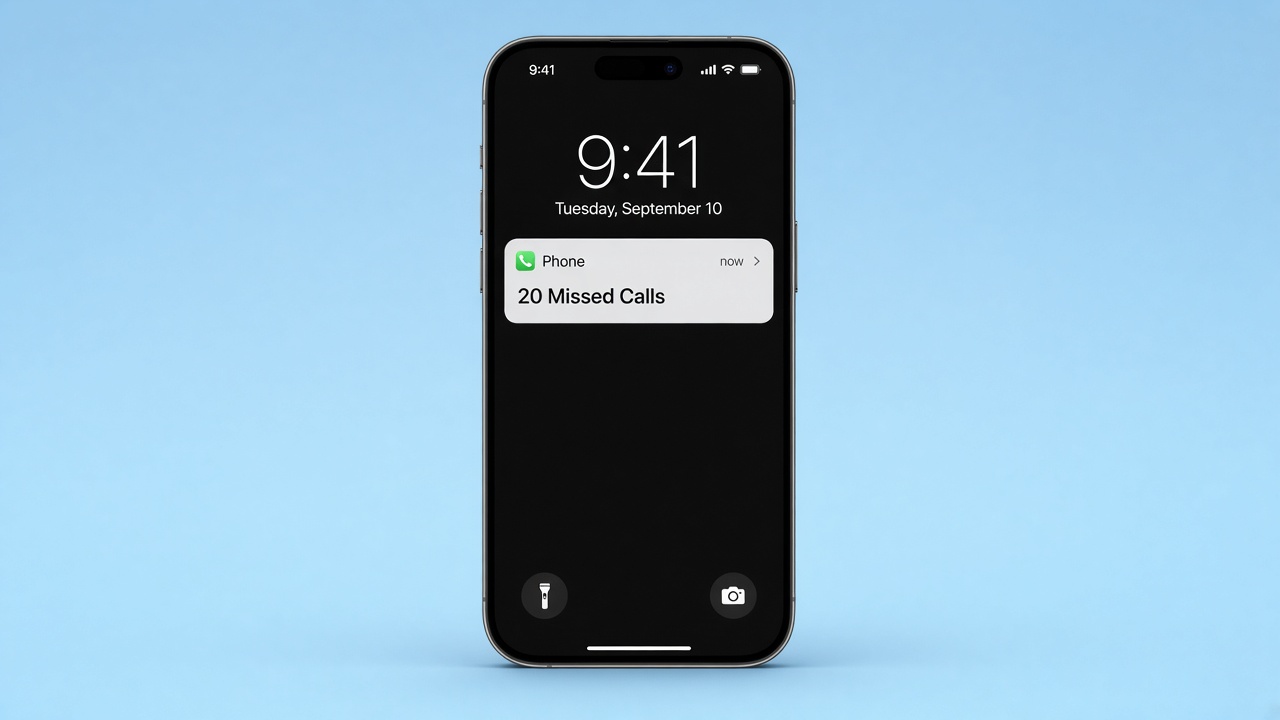
Some agents tell TalkLuna they get up to 30 spam calls a day. See how an AI receptionist filters those calls and still sends real leads to your CRM.
Read more →
TalkLuna has been accepted into Elevate's eCommerce North Tech Accelerator, presented with Moneris. Here is what that Canadian-built association means for small businesses in Canada and across North America.
Read more →
TalkLuna helps Canadian small businesses never miss a call. The Milton Chamber named us a 2026 Entrepreneur of the Year finalist as validation of that work.
Read more →TalkLuna answers when you cannot, qualifies buyer and seller inquiries, and syncs summaries to your CRM.
© 2026 talkluna. All rights reserved. Made for 🇺🇸