Franchise brands lose leads when local phones hit voicemail after hours, during rushes, or on weekends. This guide shows how AI answering captures calls, routes them by location, and protects brand standards.
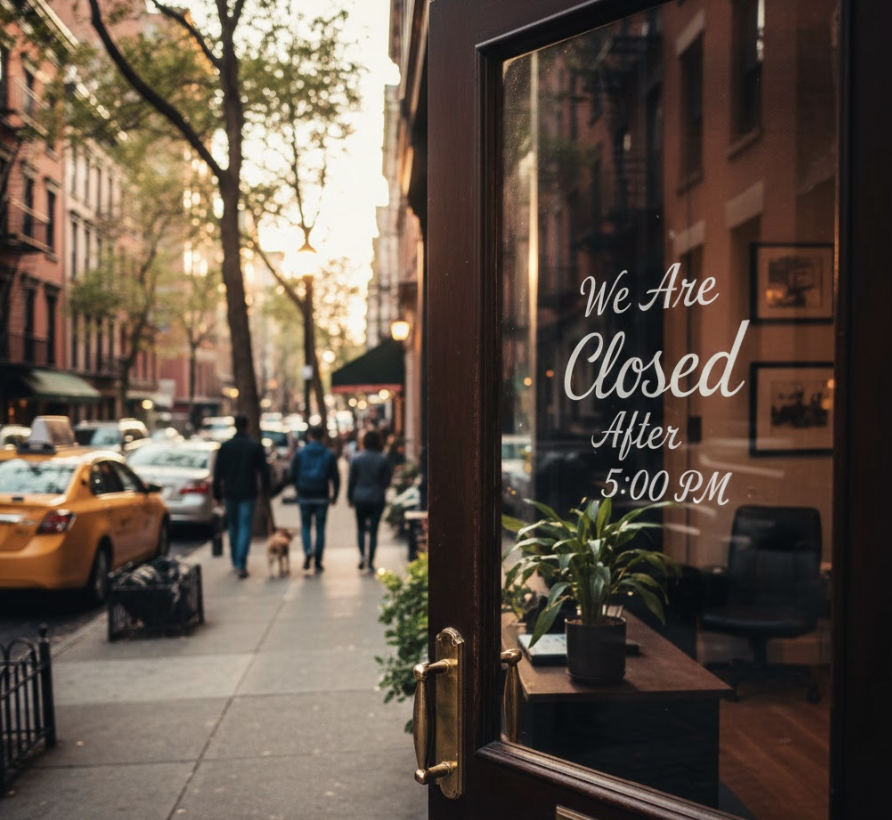
It is Friday at 6:18 p.m. A homeowner searches for your brand, taps the local number, and hears voicemail.
At the same time, another location is slammed with walk-ins. The front desk lets three calls ring because the staff member is helping customers in person.
By Monday morning, the franchisee sees missed calls. The franchisor sees ad spend. Nobody sees the customer who called the next brand that answered.
An AI answering service for franchises closes that gap. It gives each location a reliable first response while keeping brand rules, routing, booking, and reporting consistent across the network. This guide shows franchise owners, franchisors, and multi-unit operators how to evaluate call coverage without turning every local call into a generic call center script.
You will leave with:
A franchise call coverage benchmark you can use across locations
A 10-point scorecard for comparing AI answering vendors
A simple missed-call impact model for franchisees and franchisors
Sample scripts for after-hours, busy-hour, and weekend lead calls
Setup standards that keep brand voice and local routing aligned
Franchises have a call problem that single-location businesses do not have. One brand can have dozens of local numbers, different hours, different owners, different staff habits, and different booking tools. The customer does not care about that complexity. The customer called because they wanted help now.
That is why voicemail hurts franchise systems. A missed call is not just a local operational issue. It can waste national ad spend, lower location-level conversion, and create an uneven brand experience. One location answers in two rings. Another lets calls roll over during lunch. A third has a strong manager but no weekend coverage.
For smaller operators, the same issue shows up as owner overload. If your team is serving customers, driving between jobs, or closing for the day, the phone still rings. TalkLuna's answering service for small businesses covers the single-location version of this problem. Franchises need the same outcome, but with routing rules, brand controls, and reporting across every unit.
Franchise systems also depend on local search. Google's Business Profile guidelines tell businesses to keep names, addresses, service areas, hours, and categories accurate so customers get reliable local information. If a customer finds the right location but reaches voicemail, the local listing did its job and the call workflow failed.
Franchise growth makes call coverage more important, not less. The International Franchise Association's 2026 Franchising Economic Outlook projects 845,000 franchise establishments in the United States, nearly 8.9 million jobs, and more than $921 billion in economic output. Every new unit adds another phone line, another schedule, and another chance for a lead to fall through a local gap.
Lead response research points in the same direction. Harvard Business Review's article The Short Life of Online Sales Leads warns that companies spend heavily on internet-generated leads but are often too slow to follow up. For franchise brands, a phone call is even more urgent because the lead is already taking action.
Use this table to audit where calls disappear. The examples are operational patterns, not census data.
Call window | What usually happens without AI answering | Coverage target with AI answering |
|---|---|---|
After hours | Caller reaches voicemail and calls another local provider | Answer, qualify, capture consent, and book or queue callback |
Busy hours | Staff lets calls ring while helping in-person customers | Overflow picks up after a set ring count |
Weekends | Leads wait until Monday and lose urgency | Route urgent requests and schedule non-urgent appointments |
Multi-location searches | Caller reaches the wrong unit or corporate line | Confirm ZIP code, service area, and nearest open location |
Campaign surges | Paid media creates more calls than staff can handle | Scale answering without changing the local number |
Franchisee handoff | Notes live in voicemail or texts | Push structured summaries to CRM or email |
The benchmark is simple: every qualified caller should get a helpful first response in the moment they call. If a location cannot meet that standard with staff, it needs overflow or after-hours coverage.
Copy this scorecard into your franchise operations wiki or vendor evaluation sheet. Score one point for each yes.
Location-aware routing - Can the AI identify the right location by phone number, ZIP code, city, or service area?
Brand-approved scripts - Can corporate define approved greetings, FAQs, disclaimers, and escalation rules?
Local customization - Can each unit manage hours, services, pricing notes, and booking limits without rewriting the whole script?
After-hours and overflow coverage - Can it answer outside business hours and after a set number of rings during rushes?
Appointment booking - Can it book into the right calendar, job board, or scheduling workflow?
Lead qualification - Can it capture name, phone, location, service need, urgency, and preferred next step?
Human escalation - Can it transfer urgent or high-value calls to the right person in real time?
CRM or email handoff - Can it send a clean summary to the CRM, franchisee inbox, or operations dashboard?
Compliance controls - Can it handle recording notices, opt-in language, and text follow-up rules by market?
Network reporting - Can franchisors see missed-call recovery, booking outcomes, and location performance?
A vendor that scores below 7 may still help a single location. A franchise system should aim for 8 or higher before rolling it out across a territory.
Start with a model before arguing about tools. You do not need perfect data to see whether voicemail is expensive.
Monthly missed revenue = missed qualified calls per week x booking rate x average first transaction value x 4.33
Example:
12 locations
4 missed qualified calls per location per week during after-hours and rush periods
25% would have booked if answered
$220 average first transaction value
Result:
12 x 4 = 48 missed qualified calls per week
48 x 25% = 12 lost bookings per week
12 x $220 x 4.33 = $11,431 in estimated monthly revenue at risk
For a franchisor, you can also estimate royalty impact:
Estimated monthly royalty at risk = estimated monthly revenue at risk x royalty rate
If the royalty rate is 6%, the example above represents about $686 in monthly royalty at risk before repeat purchases, referrals, or customer lifetime value.
Example only. Replace inputs with your own call logs, close rates, ticket values, and royalty structure. This is not a guarantee of recovered revenue.
A franchise AI answering service should know which location the caller reached. The caller should not have to explain the franchise map. If the call comes from a local number, the AI should greet the caller with the right location name, confirm the service area, and follow that unit's hours and booking rules.
This matters for franchise trust. Customers expect a local answer, but corporate expects a consistent brand experience. AI answering should sit between those needs.
A good call summary is more than "please call back." It should include the caller's name, phone, location, service requested, urgency, preferred appointment time, and any special notes.
For service franchises, that might mean job type, property type, emergency status, and whether the caller is a new or returning customer. For fitness, wellness, or education franchises, it may mean membership interest, preferred class time, age group, or trial request.
AI should not trap urgent calls in automation. It should know which calls need a live transfer, which need a scheduled appointment, and which can wait for the next business day.
Examples include emergency repairs, safety concerns, angry customers, franchise sales inquiries, media requests, or calls from existing customers with time-sensitive issues.
The best answering layer does not stop at intake. It books jobs, creates tasks, or sends structured summaries where the team already works. For teams using CRM workflows, TalkLuna's Follow Up Boss integration shows the kind of handoff that keeps call notes from getting lost after the first response.
Franchise systems may use different tools by brand or by region. The key requirement is the same: answered calls should create a trackable next step.
Franchisors do not need to listen to every call. They need to know which locations are capturing demand and which are leaking it. Network-level reporting should show answer volume, booked appointments, urgent transfers, caller intent, and unresolved calls by location.
That turns phone coverage from an anecdote into an operating metric.
The script should sound like the brand, not like a generic robot. Corporate should control the greeting, promise, prohibited claims, approved FAQs, and escalation standards. Local operators should control hours, staff availability, holiday closures, service radius, and appointment rules.
If a vendor only offers one global script, it will break at the location level. If every franchisee writes their own script from scratch, the brand experience will drift.
Customers search by city, ZIP code, neighborhood, and "near me." Your AI answering setup should route the same way. It should handle a caller who reaches the wrong location, asks for a nearby branch, or needs a service area check before booking.
This is especially important for home services, health and wellness, education, senior care, restaurants, and property services where local availability changes daily.
The summary should be short, structured, and useful. A manager should be able to read it in 15 seconds and know what to do next.
Minimum fields should include caller name, phone number, location, reason for call, urgency, promised next step, and whether the AI booked, transferred, or queued follow-up. For broader AI answering basics, see TalkLuna's AI answering service guide.
Franchise brands need clear rules for call recording, text follow-up, and marketing messages. The FCC's TCPA guidance explains that certain autodialed calls and texts require prior express consent, and advertising or telemarketing messages can require written consent. Your legal team should approve the exact language used for consent and opt-outs.
AI answering should make compliance easier by using approved scripts, logging consent, and separating transactional appointment messages from promotional follow-up.
A dashboard should not only show call counts. It should show recoverable revenue signals:
Answered after-hours calls
Overflow calls answered during business hours
Booked appointments
Urgent transfers
Missed transfers
Top caller questions
Locations with outdated hours or service information
Those insights help corporate improve training and help franchisees see the value of better coverage.
Best fit: Existing customers who already know the team and are willing to wait.
Watch out: New leads rarely have loyalty yet. If they are comparing local options, voicemail gives them a reason to keep calling.
Best fit: Complex, emotional, or high-value calls where human judgment matters from the first sentence.
Watch out: Cost and consistency can be hard across many locations. Agents need constant updates on local hours, services, promotions, and franchise rules.
Best fit: Repeatable lead intake, after-hours coverage, busy-hour overflow, appointment requests, FAQs, and simple routing.
Watch out: AI needs clear escalation paths. Do not use it as a wall between customers and humans when the issue is urgent or sensitive.
Best fit: Franchise systems that want AI to capture routine demand and humans to handle edge cases.
Watch out: Define ownership. If AI books appointments, staff must honor them. If AI escalates urgent calls, someone must be assigned to answer.
For a real-estate version of this 24/7 coverage model, see how teams use a 24/7 AI assistant to win more deals. The same principle applies to franchises: the first response protects the opportunity.
AI greeting: "Thanks for calling [Brand] in [City]. The local team is currently closed, but I can help you get started. What service are you looking for?"
Qualify: Capture name, phone, ZIP code, service need, urgency, and preferred appointment window.
Consent: "Can we text or call this number with appointment details and follow-up about this request?"
Next step: Book if slots are available. If not, promise a callback by the next business window.
Summary: Send the location a structured note with urgency and requested service.
Trigger: AI answers after 3 to 5 rings when staff cannot pick up.
AI line: "The team may be helping another customer, but I can help right now. Are you calling to book, reschedule, or ask a question?"
Route: Book simple requests, answer approved FAQs, or transfer urgent issues.
Staff handoff: Mark the call as overflow so managers can see rush-period demand.
AI line: "I can help find the right location. What ZIP code or city do you need service in?"
Check: Match the caller to service area, nearest branch, or franchisee territory.
Next step: Transfer, book, or send the caller the correct local number.
Corporate note: Track repeated wrong-location calls. They may signal local SEO or ad routing issues.
AI line: "I can collect the details so the local team can respond with the right next step. What would you like help with?"
Qualify: Project type, timeline, address or service area, budget range if appropriate, and photos if your workflow supports SMS.
Set expectation: "The team reviews weekend requests on [timeframe]. If this is urgent, I can try to reach the on-call contact."
Handoff: Create a task or email with all intake fields.
Start with the locations where phone coverage is most fragile. That may be new units, high-ad-spend markets, weekend-heavy locations, or stores with low answer rates.
Pull call data by location. Review missed calls, voicemail volume, after-hours calls, and peak-hour abandonment.
Define the call types. Separate new leads, existing customers, vendors, support issues, spam, and urgent calls.
Write the brand-safe script. Include greeting, approved claims, FAQs, consent language, and escalation rules.
Map local routing. Confirm phone numbers, ZIP codes, hours, holiday schedules, service areas, calendars, and on-call contacts.
Choose handoff destinations. Decide whether each call creates a CRM record, email, task, calendar booking, or live transfer.
Pilot with a small location group. Include one strong operator, one average location, and one location with known missed-call issues.
Review calls weekly. Look for confused callers, missing fields, wrong routing, and script gaps.
Roll out with operating standards. Give franchisees a simple playbook for updating hours, services, staff contacts, and escalation rules.
Keep these standards visible:
Answer standard: Every qualified caller gets a helpful first response, even when staff are busy or closed.
Routing standard: Every call is tied to a location, territory, or corporate queue.
Handoff standard: Every lead has a next step and an owner.
Update standard: Local hours, services, and booking rules are reviewed at least monthly.
Escalation standard: Urgent, sensitive, or high-value calls can reach a human.
Customer-service expectations are moving toward faster, easier support. NiCE's 2025 Global Happiness Index found that 72% of consumers report benefits from AI and automation in customer service, while consumers rank speed of resolution as a top priority. For franchises, that means the best AI answering setup is not the one that sounds the fanciest. It is the one that helps the customer get to the right next step quickly.
A franchise brand can spend heavily on ads, local SEO, signage, and referrals. But if the phone goes to voicemail when the customer is ready, the system leaks demand at the last step.
AI answering gives franchise teams a practical way to protect that moment. It answers after hours, supports staff during rushes, routes calls by location, captures clean notes, and gives corporate visibility into what is happening across the network.
If your franchise system is ready to replace voicemail with a first response, TalkLuna can help you design the coverage model, scripts, and handoff workflows that fit your locations without adding another full-time receptionist at every unit.
An AI answering service for franchises is a phone coverage system that answers calls for multiple franchise locations, qualifies callers, routes them to the right unit, and sends a clear next step to staff. It is designed to keep local calls from going to voicemail while maintaining brand-approved scripts and escalation rules.
AI answering helps franchisees capture more leads by answering when staff are closed, busy, or helping in-person customers. It collects the caller's contact details, service need, location, urgency, and preferred next step so the local team can book or follow up without starting from scratch.
Yes. A strong franchise AI answering setup lets the franchisor control approved greetings, FAQs, brand claims, consent language, and escalation rules. Local franchisees should still be able to update hours, services, appointment availability, and local contacts inside those brand standards.
AI answering is better for repeatable calls like lead intake, appointment requests, FAQs, after-hours coverage, and overflow. A live answering service is better for complex, emotional, or high-value conversations that need human judgment right away. Many franchise systems use a hybrid model.
Franchise AI answering should integrate with the systems that create action: calendars, CRMs, job management tools, email queues, and reporting dashboards. At minimum, every qualified call should produce a structured summary with caller name, phone, location, need, urgency, and next owner.
Franchises should measure answered after-hours calls, overflow calls, booked appointments, urgent transfers, lead summaries delivered, missed transfer attempts, and conversion by location. The goal is not just more answered calls. The goal is more qualified calls reaching the right next step.
A practical guide to AI receptionists for home service businesses, including emergency triage, booking workflows, ROI math, integrations, and vendor evaluation criteria.
Read more →Compare AI receptionists, virtual receptionists, answering services, and hybrid call coverage with a practical scorecard, cost model, and rollout plan.
Read more →AI receptionist pricing usually depends on minutes, call volume, integrations, and human handoff. Use this North American buyer guide to compare costs, ROI, and plans.
Read more →TalkLuna answers when you cannot, qualifies buyer and seller inquiries, and syncs summaries to your CRM.
Blog
Case Studies
Integrations
© 2026 talkluna. All rights reserved. Made for 🇺🇸